

BlogSocial media for political campaigns
Political marketing on social media: preparing a campaign for 2027
What to do on social media from today until Colombia's October 2027 regional elections, stage by stage and within the rules.
11 min read
If you plan to run for mayor, governor, departmental assembly or city council in Colombia in 2027, the practical question is when to start on social media and what you can do at each stage without getting into trouble. The short answer: the election is on Sunday, October 31, 2027; electoral propaganda on social media is only allowed in the 60 days before the vote, from early September 2027; and the audience you will convert in that window is built starting today, with content that does not ask for the vote. This guide explains the calendar and its legal basis, the difference between communicating and campaigning, and what to prepare at each stage.
Technical summary
- Date: elections for governors, mayors, assembly members, councillors and local board members are held on the last Sunday of October (Law 163 of 1994, art. 1). In 2027 that is October 31, the date announced by the Registraduría (the national registrar); the resolution with the full calendar has not been issued yet.
- Candidate registration: lasts one month and opens four months before the vote (Law 1475 of 2011, art. 30). In 2023 it ran from June 29 to July 29; for 2027 it should open in late June.
- Spending: a candidate can only raise and spend money from the moment of registration; parties, from six months before the vote (art. 34).
- Propaganda: in the media, including social media, only in the 60 days before the vote; in public space (billboards, street banners), in the three months before (art. 35). Communicating programmes and achievements without asking for the vote is allowed at any time (Law 130 of 1994, art. 23).
- Electoral Code: Decree 2241 of 1986 remains in force. The reform passed by Congress was struck down in 2024 (ruling C-340 of 2024).
Where the rules stand in September 2026
Settled: the date, the registration, financing and propaganda rules of Law 1475 of 2011, the political communication and polling rules of Law 130 of 1994, the restrictions on public servants in Law 996 of 2005 and the 1986 Electoral Code. Still pending: the Registraduría’s day-by-day calendar resolution, expected around October 31, 2026, and the 2027 spending caps, which the CNE (National Electoral Council) sets every January (Law 1475, art. 24). The new electoral reform the Registraduría is promoting before the Congress elected in 2026 changes nothing until it becomes law and passes Constitutional Court review.
One date that is not about social media but decides who can run: for mayor and city council, no one can register who, in the 12 months before the election, held a public post with authority in that municipality (Law 136 of 1994, arts. 95 and 43, as amended by Law 617 of 2000). Counting back from October 31, 2027, anyone holding such a post today must leave it by October 31, 2026. For governor and assembly, the disqualifications are in Law 2200 of 2022. Each case should be checked with the campaign’s lawyer.
The social media campaign calendar
The 2027 dates the law does not set directly are calculated from current rules and the 2023 precedent. The Registraduría’s resolution prevails once issued.
| When | What happens legally | What you do on social media |
|---|---|---|
| Today to October 2026 | Political communication only; nobody is a candidate | Accounts, narrative, competitor review, local and track-record content |
| October 31, 2026 | Calendar opens; deadline to leave a public post with authority in the territory (12 months) | Decide whether you run: from here content is organised around the candidacy |
| November 2026 to June 2027 | Signature collection (citizen groups), party endorsements, primaries | Community building and a supporter list with consent |
| Around April 30, 2027 | Parties can raise and spend for the campaign (6 months before) | Agree with the party which costs it covers and how they are reported |
| Late June to late July 2027 | Candidate registration (one month); from registration, the candidate can spend | Meta authorisation ready, campaign manager and single bank account, Cuentas Claras active |
| From July 31, 2027 | Propaganda in public space (3 months) | Billboards and street pieces consistent with social media |
| From September 1, 2027 | Propaganda in the media and on social media (60 days) | Ads, daily production, response room, weekly report |
| October 31, 2027 | Election day | Response room active; no propaganda near polling tables |
| Up to one month after | Candidate and manager file their report with the party; the party files with the CNE within two months (art. 25) | Hand every ad receipt to the accountant |
Communicating is not the same as campaigning
Almost every problem in a digital pre-campaign comes from confusing these two categories:
- Electoral propaganda is “any form of advertising carried out to obtain the vote” for candidates, lists, parties or the blank vote (Law 1475, art. 35). On social media, only in the 60 days before the vote.
- Political communication (“divulgación política”) spreads principles, programmes and achievements “without seeking electoral support”, and can be done at any time (Law 130, art. 23).
Since July 2020 the CNE considers that using Facebook, Instagram or X to promote a candidacy is propaganda, and that doing it outside the allowed period compromises the candidate. Support that citizens post spontaneously is not treated as the campaign’s propaganda; what gets reviewed is the official accounts and what the candidate consents to.
Before posting anything outside the window, run the piece through this check:
- Does it ask for the vote or electoral support? “Vote”, “mark”, “back me on October 31”, your ballot number: that is propaganda.
- Does it use the campaign logo, number or slogan? If it looks like an electoral ad, treat it as one.
- Is it paid? A paid piece with your face stays public in Meta’s Ad Library and amplifies any reading against you.
- Does it report a position, a piece of work or a neighbourhood visit without asking for anything electoral? That is political communication and can go out at any time.
If a piece sits on the line, the campaign’s lawyer decides, not the social media manager.
Stage 1. From today: the groundwork you cannot improvise
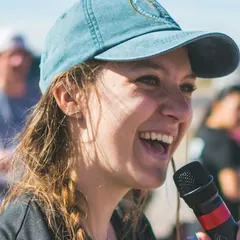
- Accounts controlled by the team. Facebook Page, Instagram, TikTok and WhatsApp with at least two admins, two-factor authentication and campaign email addresses, not one person’s or the agency’s.
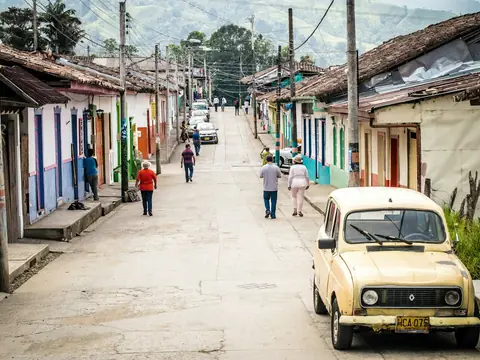
- A short narrative. Which concrete problem of the town or neighbourhood you address, why you and what you will do first. A year of content comes from there.
- Competitor review. What rivals post and what people comment. Meta’s Ad Library shows their political ads with approximate spend and reach by age, gender and region.
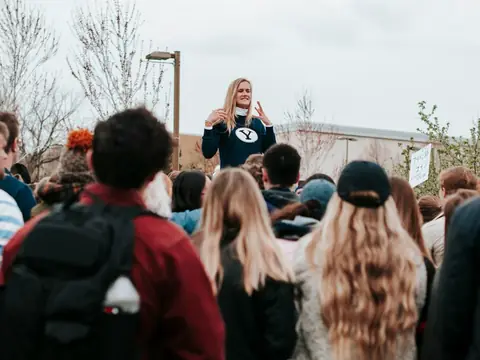
- Local and track-record content. Neighbourhood walks, community meetings, positions on concrete issues. It is political communication: it informs and does not ask for the vote.
Stage 2. Build a community and a lawful database
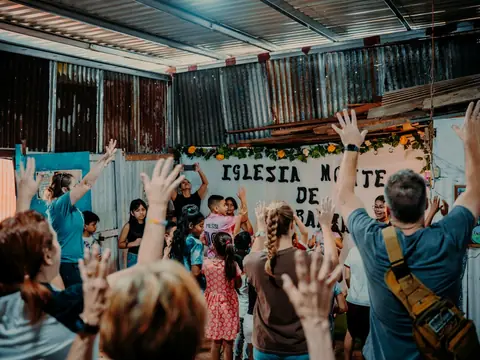
The months before registration decide the digital result, and only one thing is measured: how many people in the territory follow, comment and message. Our working pace is four to five posts a week plus daily stories, with the aspiring candidate talking to people on the street.
This is where the most underestimated legal risk appears: the supporter list. Law 1581 of 2012 defines as sensitive data anything that reveals political orientation or membership of organisations promoting a party’s interests (art. 5), and prohibits processing it except with the data subject’s explicit authorisation (art. 6). In practice:
- Only people who authorise it through a verifiable channel (a form or a WhatsApp message) go into the list.
- They must be told they are not obliged to authorise processing of sensitive data, and what it will be used for.
- No buying lists, and no uploading contact lists to Meta without consent to build custom audiences.
Consent text ready to adapt (review it with the campaign’s lawyer):
I authorise [campaign or candidate name], ID [NIT or cédula], to process my personal data, including the sensitive data of my political affinity, to send me campaign information and coordinate volunteer activities by WhatsApp, email or phone. I know I am not obliged to authorise the processing of sensitive data, and that I can access, update and delete my data and revoke this authorisation by writing to [email] or replying STOP.
Stage 3. Registration: the rules change
Registration changes the obligations:
- The candidate can raise and spend. Before registration, they cannot (Law 1475, art. 34). How services contracted before that date are treated is a question for the campaign’s accountant and lawyer.
- Campaign manager and single account. If the campaign cap exceeds 200 monthly minimum wages, funds are managed by a campaign manager through a single bank account (art. 25). With the 2023 caps and that year’s minimum wage (COP $1,160,000, so COP $232,000,000), this covered every city council list and mayoral races in municipalities with more than 25,000 registered voters.
- Cuentas Claras. Every income and expense is recorded in the CNE’s application from registration until eight days after the election, no later than the week after each transaction.
- Registered logo. Propaganda may only use symbols and logos registered with the CNE (art. 35).
- Meta authorisation. Identity confirmed and “Paid for by” disclaimer approved before the window. We cover it in political ads on Facebook and Instagram.
Stage 4. The propaganda window
From July 31, 2027 propaganda is allowed in public space, and from September 1 in the media and on social media. In those 60 days the pace changes:
- Daily production. Posts and reels every day, with same-day event coverage.
- Ads by territory. Budget per district, locality or municipality, with every ad declared in the special category for social issues, elections or politics.
- Response room. Comments and messages answered within minutes, with a protocol for fake news and attacks.
- Weekly report. Reach by territory, conversations, new volunteers and cumulative spend against the cap.
Be careful with public servants: the Constitution bars those working in the judiciary and in electoral, oversight and security bodies from political activity (art. 127), and Law 996 of 2005 prohibits state employees from pressuring subordinates or spreading propaganda through official media (art. 38). In the four months before the vote, governors, mayors and local agency heads cannot put public resources into campaign events or inaugurate works at events with candidates.



Stage 5. Election day
- No spoken propaganda near the polling tables (Decree 2241 of 1986, art. 119).
- Polls and projections. On election day the media cannot publish projections or poll results on how people voted or plan to vote (Law 130, art. 30). Polls are also governed by Law 2494 of 2025, with technical requirements and CNE oversight: do not publish your own “polls”.
- Useful information for those who asked. The polling station by WhatsApp to people who signed up for it, ideally the day before. The response room stays on until the count closes.
A worked example
A hypothetical city council hopeful in a Caribbean coast municipality with 400,000 registered voters, starting in October 2026. These figures are a work plan, not promised results:
| Period | Weeks | Posts | Stage goal |
|---|---|---|---|
| October 2026 to June 2027 | 35 | 4 a week = 140 | 2,000 local people on the list with consent |
| Registration to August 31, 2027 | 9 | 5 a week = 45 | Meta authorisation and Cuentas Claras ready; 3,000 on the list |
| September 1 to October 30, 2027 | 8.5 | 1 to 2 a day ≈ 90 | Ads by district; replies in under 15 minutes |
Whoever starts in September 2027 has 60 days to become known and win votes, paying for ads to reach strangers. Whoever starts today reaches the window with 185 posts of history and a list of people who already asked for information. We cover the cost of each stage in what it costs to run a campaign’s social media.
The mistakes that cost the most
- Paid ads asking for the vote before the 60 days. That is untimely propaganda, and it stays public in the Ad Library for seven years.
- Databases without consent. Political opinion is sensitive data; without explicit authorisation, processing it is prohibited.
- Undocumented spending. Digital ads count toward the cap and are reported. Exceeding the cap is punished with loss of office (Law 1475, art. 26).
- Supporters running ads on their own. For 2023 the CNE required that internet propaganda be contracted only by parties, candidates and campaigns, and that third-party support be coordinated and reported as a donation.
Frequently asked questions
Has the date of the 2027 elections been set?
Yes. The law sets them on the last Sunday of October (Law 163 of 1994) and the Registraduría has announced Sunday, October 31, 2027. What is still missing is the resolution with the detailed registration calendar and deadlines.
Does propaganda start three months or two months before?
It depends on the medium. In public space (billboards, street banners, posters), three months; in the media, including social media, 60 days (Law 1475 of 2011, art. 35).
When should I apply for Meta authorisation?
Before registration. Identity confirmation and approval of the “Paid for by” disclaimer depend on Meta reviews that can take days, and without them no political ad runs.
What if the Electoral Code reform passes before 2027?
A statutory reform only takes effect after approval by Congress and prior review by the Constitutional Court. Until then, Decree 2241 of 1986 and Laws 130 of 1994 and 1475 of 2011 apply.
Sources: Law 163 of 1994, Law 1475 of 2011, Law 130 of 1994, Law 996 of 2005, Law 617 of 2000, Law 1581 of 2012 and Decree 2241 of 1986 at the Senate Secretariat; Law 2494 of 2025 at SUIN-Juriscol; CNE statement on social media and CNE 2023 resolutions; Registraduría calendar for the 2023 local elections; ruling C-340 of 2024; Cuentas Claras reporting guide; Meta policy on ads about social issues, elections or politics. Accessed in September 2026. This article explains general rules and does not replace advice from your campaign’s lawyer.
If your campaign is in Atlántico, Magdalena or La Guajira, this is how we work: social media for political campaigns, with a legal calendar, daily content and a response room. For a proposal with dates, tell us which office you are running for.
Strategy, content and a response room on social media and WhatsApp for council, mayoral, assembly, House and Senate candidates.
Keep reading
-
Social media for political campaigns
Political ads on Facebook and Instagram: what Meta and the CNE require
How Meta authorises political ads, what the Ad Library shows, the 60-day window and how to calculate and report the CNE spending cap in Colombia.
September 27, 202610 min read -
Social media for political campaigns
What it costs to run a political campaign’s social media in Colombia
What the team, ads and production of a campaign cost, how to size ad spend within the CNE cap and a worked city council budget with real 2023 caps.
September 27, 20269 min read -
Social media for political campaigns
Political ads on Facebook and Instagram: what Meta and the CNE require
How Meta authorises political ads, what the Ad Library shows, the 60-day window and how to calculate and report the CNE spending cap in Colombia.
September 27, 202610 min read -
Social media for political campaigns
What it costs to run a political campaign’s social media in Colombia
What the team, ads and production of a campaign cost, how to size ad spend within the CNE cap and a worked city council budget with real 2023 caps.
September 27, 20269 min read -
Social Media Management
What to post every week on your hotel Instagram
A weekly and monthly calendar for a hotel Instagram: five content types, each format's limits, how to schedule it and what to measure.
September 24, 20269 min read