

What a hotel website needs to sell direct
Google's speed thresholds, what Colombian law requires you to publish (RNT, tax-inclusive price, data policy) and when a booking engine pays off.
11 min read
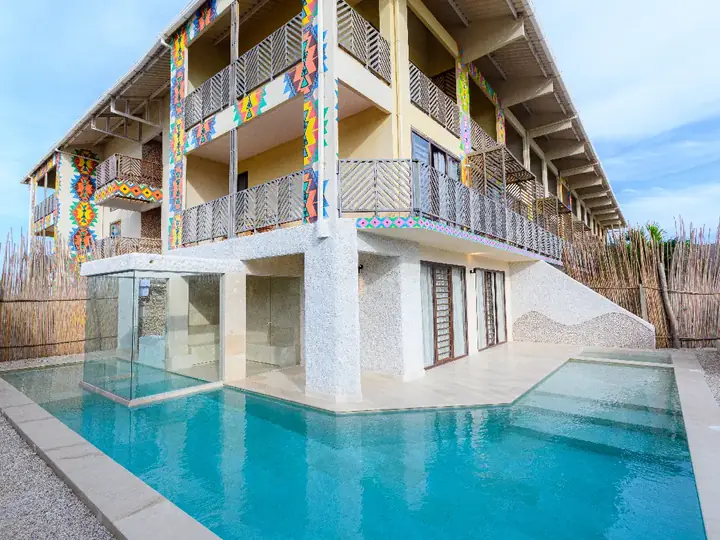
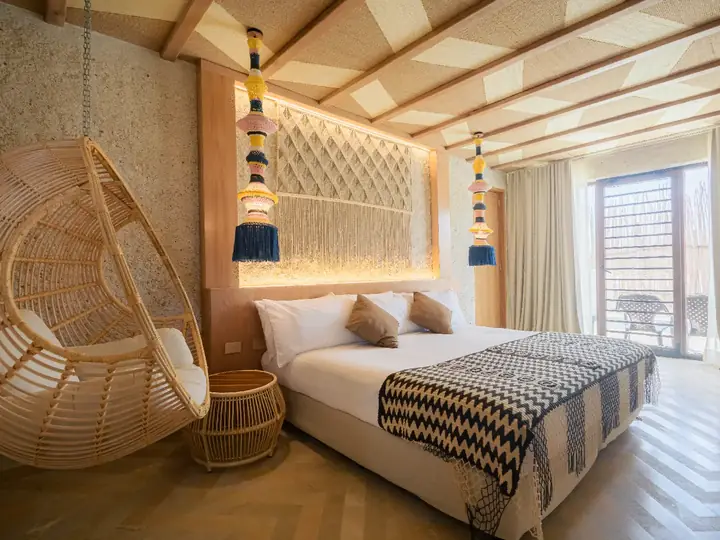

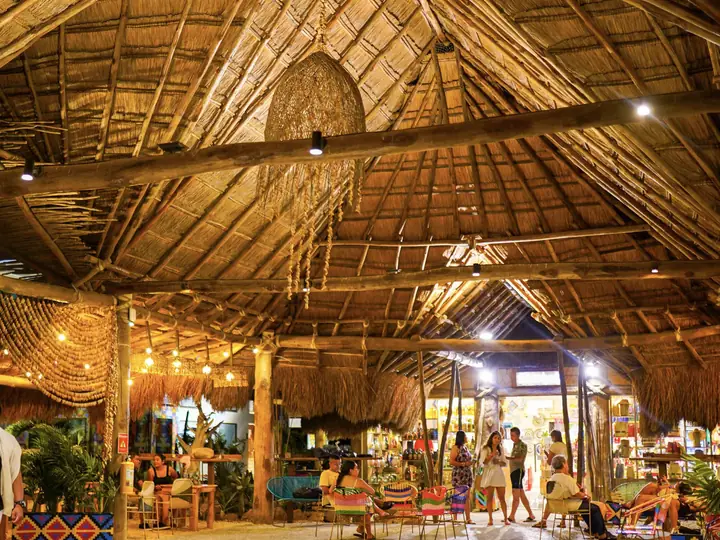
A hotel website has one concrete job: getting the person who found you on Instagram, on Google or on an OTA to book with you. To do that it needs three verifiable things: load fast on a phone according to Google’s metrics, show price and conditions without forcing people to message you, and meet what Colombian law requires a tourism provider to publish. This guide gives the thresholds, the regulations, how the booking engine and Google’s free booking links fit in, and how to work out whether the investment pays for itself.
Technical summary
- Speed according to Google (Core Web Vitals): LCP of 2.5 seconds or less, INP of 200 milliseconds or less and CLS of 0.1 or less, measured at the 75th percentile of real visits and separately for mobile and desktop.
- Price: in Colombian pesos, including taxes and additional charges (Law 1480 of 2011, article 26).
- RNT: current National Tourism Registry certificate published on the website and the number on all advertising (Decree 1836 of 2021).
- Personal data: data processing policy, privacy notice and prior authorization (Law 1581 of 2012, Decree 1377 of 2013).
- Structured data: schema.org Hotel type in JSON-LD, without your own reviews.
- Google free booking links: no cost per click; they require sending rates through a connectivity partner or Hotel Center.
How Google measures your website’s speed
Google measures three things using data from real Chrome users and takes the value met by 75% of visits: if 75% of mobile visits see the main photo in 2.5 seconds or less, that metric passes.
| Metric | What it measures | Good | Needs improvement | Poor |
|---|---|---|---|---|
| LCP (Largest Contentful Paint) | How long the largest element takes to appear, almost always the hero photo | ≤ 2.5 s | 2.5 to 4 s | > 4 s |
| INP (Interaction to Next Paint) | How long the page takes to respond when the visitor taps a button or opens a menu | ≤ 200 ms | 200 to 500 ms | > 500 ms |
| CLS (Cumulative Layout Shift) | How much elements move while loading (the button that jumps just as you tap it) | ≤ 0.1 | 0.1 to 0.25 | > 0.25 |
INP replaced FID in March 2024; a report that still shows FID is out of date. Google recommends good Core Web Vitals because they align with what its ranking systems reward, but it does not promise rankings for meeting them. The underlying reason is different: a guest on the road to Palomino with patchy signal does not wait.
What moves LCP the most on a hotel website, according to web.dev’s optimization guide:
- Do not lazy-load the hero photo. The loading=”lazy” attribute on the hero image always delays LCP. Use it on photos further down.
- Mark the hero photo as high priority (fetchpriority=”high”) and serve it in WebP or AVIF, at the size it is displayed.
- Reduce server response time. On average it is around 40% of LCP: an overloaded shared host ruins it even if the photos are compressed.
- Declare width and height for every image and the embedded map so CLS does not climb when they finish loading.
- Cut third-party scripts (chat widgets, pop-ups, sliders, duplicate pixels): they compete for the phone’s processor and hurt INP.
Check it in PageSpeed Insights: the field data section is what Google uses. With little traffic you will only see lab data, which is useful for diagnosis but is not the official assessment.
What guests need to see before they message you
Every question the website does not answer turns into a chat, and every chat without a fast reply is a booking that goes to the OTA:
- Visible, complete price. “From COP $380,000 per night for two, taxes included, with breakfast.” If it varies by season, show the table. Anyone who cannot see a price compares on another page.
- WhatsApp button with a prefilled message. The official link format is https://wa.me/573001234567?text=…: full number with country code 57, no + sign, no spaces or dashes, and the text URL-encoded. If the visitor is on the suite page, the message should say “Hi, I’d like a quote for the Sea Suite”.
- One page per room type. Capacity, bed type, bathroom, view, size and real photos. Law 1480 requires truthful, sufficient, clear and up-to-date information about what is included.
- Getting there. Time from the airport or bus terminal, whether a 4×4 is needed, whether there is a transfer and what it costs. In the Sierra Nevada or La Guajira it is one of the most visited pages.
- Policies in two lines each. Check-in, check-out, deposit, cancellation, pets and minors. On minors, Law 2068 of 2020 (article 33) prohibits lodging minors who are not accompanied or authorized by at least one parent or legal guardian. Say so.
- Linked social proof. Your Google rating with a link to the profile and recent reviews. As visible content, not as structured data (the reason is below).
What Colombian law requires a hotel website to publish
This almost never appears in design quotes, and it is what exposes the hotel to the Superintendence of Industry and Commerce (SIC), the authority that oversees tourism providers.
| What to publish | Regulation | Where it goes on the site |
|---|---|---|
| Current RNT certificate and its number | Decree 1074 of 2015, art. 2.2.4.1.1.11 (amended by Decree 1836 of 2021) | Footer on every page and a link to the PDF certificate |
| Legal name, tax ID (NIT), address for legal notices, phone and email | Law 1480 of 2011, art. 50, item a | Footer and contact page |
| Price in pesos with taxes and additional charges | Law 1480 of 2011, art. 26 | Room pages, packages and booking engine |
| Payment methods, service features and relevant conditions | Law 1480 of 2011, art. 50, items b and c | Room pages and policies page |
| Data processing policy and privacy notice | Law 1581 of 2012; Decree 1377 of 2013, arts. 13 and 15 | Its own page, linked from the footer and every form |
| Authorization to process data | Law 1581 of 2012, art. 9 | Unticked box on forms and first message on WhatsApp |
The RNT is renewed between January 1 and March 31 every year; otherwise it is automatically suspended and reactivating it costs one monthly minimum wage paid to Fontur. Update the PDF on the website every April.
Minimum text for the authorization box on a quote form:
I authorize [legal name], NIT [number], to process my data to answer this request, manage my booking and, if I tick the next box, send me offers. I have read the data policy at [link] and can view, correct or request deletion of my data by writing to [email].
If your company’s total assets exceed 100,000 UVT, you must also register your databases in the SIC’s National Database Registry.
Booking engine, channel manager and Google free booking links
These are three different pieces often sold as one:
- Booking engine: the module on your website where the guest picks dates, sees real availability and pays or leaves a guarantee.
- Channel manager: syncs availability and rates between your engine and the OTAs; whatever sells on one channel closes on all of them.
- Google free booking links: the prices shown on the hotel’s Google profile, next to the OTAs. They cost nothing per click, but Google needs to receive your rates through a connectivity partner (it lists more than 400, including most booking engines) or a direct Hotel Center connection. Position depends on price accuracy and the landing page.
The channel manager also has a legal reason. Law 300 of 1996 (articles 63 and 64) requires a hotel that fails to honor a booking, overbooking included, to provide a service of equal quality or to refund or compensate, at the guest’s choice; if it cannot, it must hire it from a third party at its own cost. In January 2026 the SIC warned that such conduct can lead to fines of up to 2,000 monthly minimum wages. Selling the same room on WhatsApp and on Booking without syncing is the most direct way to end up there.
| Hotel situation | What makes sense |
|---|---|
| One OTA, few direct bookings, one person replies | Website with price and WhatsApp, calendar kept by hand with discipline |
| Two or more OTAs and frequent direct bookings | Channel manager is a must; your own booking engine connected to it |
| You want your price on your Google profile | An engine that is a Google connectivity partner, with accurate rates |
| Many group, package or custom tour enquiries | Engine for standard bookings and WhatsApp for what needs a conversation |

Structured data: what to mark up and what not to
Google Search Central asks you to use the most specific LocalBusiness subtype; for a hotel it is Hotel (under LodgingBusiness). Required: name and address. Recommended: phone, URL, coordinates and price range. LodgingBusiness adds check-in, check-out, number of rooms, amenities, pets and languages.
JSON-LD example for the home page (it goes inside a script tag of type application/ld+json):
{“@context”:”https://schema.org”,”@type”:”Hotel”,”name”:”Hotel Ejemplo Palomino”,”url”:”https://hotelejemplo.co/”,”telephone”:”+57 300 123 4567″,”priceRange”:”COP 380,000 – 650,000″,”address”:{“@type”:”PostalAddress”,”streetAddress”:”Vía Troncal del Caribe km 70″,”addressLocality”:”Palomino”,”addressRegion”:”La Guajira”,”addressCountry”:”CO”},”geo”:{“@type”:”GeoCoordinates”,”latitude”:11.25,”longitude”:-73.56},”checkinTime”:”15:00″,”checkoutTime”:”12:00″,”numberOfRooms”:18,”petsAllowed”:false,”availableLanguage”:[“es”,”en”],”amenityFeature”:[{“@type”:”LocationFeatureSpecification”,”name”:”Pool”,”value”:true},{“@type”:”LocationFeatureSpecification”,”name”:”Wifi”,”value”:true}]}
What you should not mark up: aggregateRating with your own reviews. Google states that if the reviewed entity controls the reviews about itself, its pages using LocalBusiness or Organization are not eligible for star ratings, even if you embed them with a Google or Facebook widget. Google also does not guarantee a rich result for adding markup: it helps Google understand your hotel.
Tracking from day one
The minimum to know which page sells and to run ads with judgment:
- Google Analytics 4 with key events. Since 2024, what Analytics called a conversion is called a key event. Mark the WhatsApp click, the call click and the completed booking that way.
- Meta Pixel with the same events, installed in an account that belongs to the hotel’s business portfolio, not the agency’s.
- UTM parameters on links from Instagram, the Google profile and messages to guests.
- Visits and clicks per page: traffic without clicks points to price, photos or offer; clicks without bookings point to the conversation.
How to match an ad click with a booking that arrives by chat is covered in how to know which ad brought the booking.
A worked example
An 18-room hotel in Palomino (hypothetical example), with these figures for a typical mid-season month:
| Figure | Value |
|---|---|
| Website sessions | 3,000 |
| Clicks on WhatsApp or book (4%) | 120 |
| Bookings closed (25% of those contacts) | 30 |
| Average value per booking | COP $900,000 (two nights) |
| Commission that booking would carry on an OTA (18%) | COP $162,000 |
| Commission avoided if those 30 bookings had come from an OTA | COP $4,860,000 a month |
Not all of those bookings would have come through an OTA; some were direct anyway. Assume, conservatively, that one third (10 bookings) used to pay commission: the real saving is COP $1,620,000 a month. With a booking-enabled site at COP $12,000,000 and maintenance at COP $350,000 a month, the payback works out like this:
Months to recover the investment = site cost ÷ (monthly commission saved − monthly maintenance) = COP $12,000,000 ÷ (COP $1,620,000 − COP $350,000) ≈ 9.4 months
The lever is the click rate: if it rises from 4% to 5% with the same close rate, you get 37.5 bookings instead of 30. Measure your baseline before changing anything so you know what moved the number.
Mistakes that cost money
- Price “plus VAT” or without the service charge. The law requires you to charge the advertised price; if you advertised without taxes, you lose the difference or risk a complaint.
- A lazy-loaded or 3 MB hero photo. It delays the LCP of the whole page.
- Domain, hosting and Analytics in the designer’s name. If the relationship ends, the website leaves with them.
- Selling on WhatsApp without checking the OTA calendar. An overbooking forces you to relocate the guest at your own cost.
- Missing or expired RNT on the website. It is enforceable and easy to check.
Frequently asked questions
How fast should a hotel website load?
According to Google, the main element should appear in 2.5 seconds or less (LCP) for 75% of mobile visits, the page should respond to a tap in 200 milliseconds or less (INP) and the layout should not shift more than 0.1 (CLS).
Do I need a booking engine or is WhatsApp enough?
With a single OTA and few direct bookings, a website with price and WhatsApp works. With two or more channels you need a channel manager and an engine connected to it, which is also the usual way to show your price in Google’s free booking links.
Is it mandatory to show the RNT number on the website?
Yes. Decree 1836 of 2021 requires displaying the current National Tourism Registry certificate at the establishment and on the website, and including the number in advertising and on the platforms where you sell.
Can I show the price without VAT and add it at the end?
No. Law 1480 of 2011 requires the price to be shown in pesos with all taxes and additional charges, and the consumer only pays the advertised price. The exempt rate for non-resident guests is explained separately.
Will structured data give me stars on Google?
Not for your own hotel: Google excludes businesses that publish reviews about themselves from star ratings. Hotel markup helps Google understand your address, hours, prices and services.
Sources: Core Web Vitals on web.dev, guide to optimizing LCP, Core Web Vitals and Google Search, local business structured data, review snippet guidelines, schema.org/Hotel, Google free booking links, Google connectivity partners, Google Analytics key events, WhatsApp click to chat, Law 1480 of 2011, Law 1581 of 2012, Decree 1377 of 2013, Decree 1836 of 2021, Law 2068 of 2020, Law 300 of 1996, SIC statement of January 2026 and National Database Registry, accessed in September 2026.
To reduce OTA dependence with this website, continue with how to win back direct reservations and the Google Business Profile guide for hotels. If you want us to build it to these requirements, see our web design service (landing page COP $2,400,000, corporate site COP $6,900,000, booking-enabled site from COP $12,000,000) or request a quote.
Fast websites with baseline SEO and WhatsApp built in: landing page, corporate site or booking engine.
Keep reading
-
Web Design
What a tourism marketing agency in Colombia should do
Which deliverables to demand, which accounts must be yours, what the contract should say and how to calculate cost per booking to spot overpaying.
August 7, 202610 min read -
Web Design
You depend on Booking: how to win back direct reservations
How Booking charges, what the wide parity that applies in Colombia forbids and how much a direct booking can cost you, with a 90-day plan and numbers.
August 1, 202611 min read -
Social media for political campaigns
Political marketing on social media: preparing a campaign for 2027
What to do on social media from today until Colombia's October 2027 regional elections, stage by stage and within the rules.
September 27, 202611 min read -
Social media for political campaigns
Political ads on Facebook and Instagram: what Meta and the CNE require
How Meta authorises political ads, what the Ad Library shows, the 60-day window and how to calculate and report the CNE spending cap in Colombia.
September 27, 202610 min read -
Social media for political campaigns
What it costs to run a political campaign’s social media in Colombia
What the team, ads and production of a campaign cost, how to size ad spend within the CNE cap and a worked city council budget with real 2023 caps.
September 27, 20269 min read